
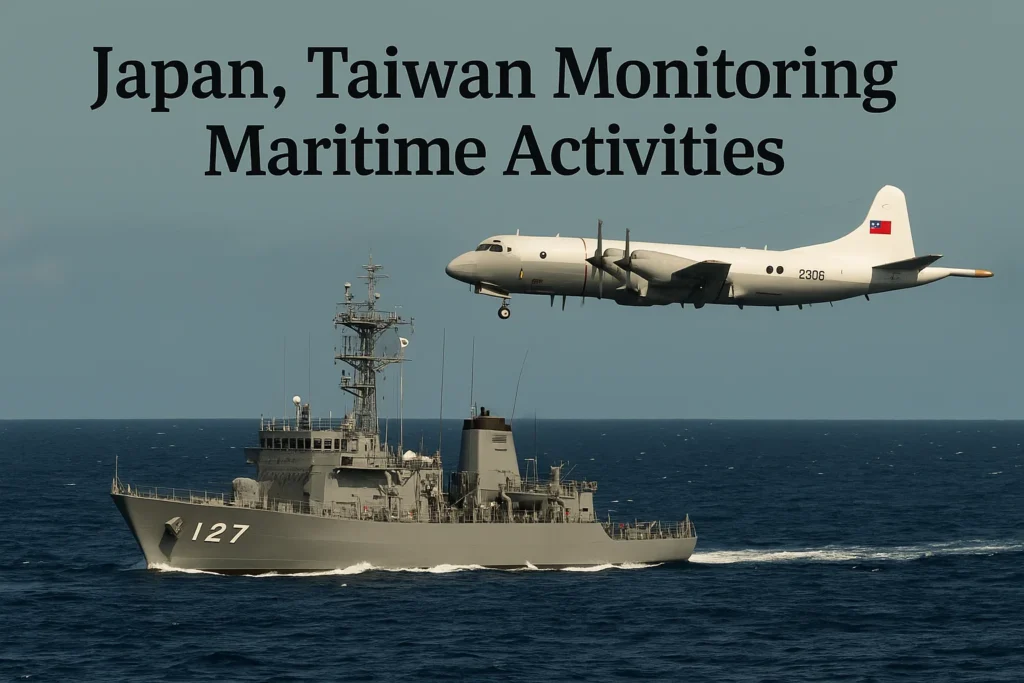
Monitoring China’s Increased Maritime Activities has become one of the most important security topics in the Asia-Pacific region. In recent months, both Japan and Taiwan have reported a rise in China’s naval and coast guard activities near their waters. These movements include more patrol ships, military vessels, and aircraft crossing sensitive zones.
As geopolitical tensions rise, Japan and Taiwan are increasing surveillance, strengthening cooperation, and preparing for possible challenges in the region. This article explains the reasons behind China’s maritime expansion, the strategic response by Japan and Taiwan, regional security implications, and what the future may look like.
Why Are Japan and Taiwan Monitoring China More Closely?
China has significantly increased its maritime presence in the East China Sea, South China Sea, and near Taiwan Strait. These waters are strategically important for global trade and defense.
Both Japan and Taiwan say the increased movement includes:
- Chinese naval ships
- Coast guard patrols
- Military aircraft
- Surveillance vessels
This rise in activity has raised concerns about regional stability, freedom of navigation, and national security.
Quick Summary Table: China’s Maritime Activities & Regional Response
| Area | China’s Activities | Japan & Taiwan Response |
|---|---|---|
| East China Sea | Increased patrols, military ships | More coast guard ships, radar tracking |
| Taiwan Strait | Frequent aircraft crossings | Heightened air defense monitoring |
| Pacific side | Longer naval missions | Joint drills with partners |
| Global impact | Trade route risks | Strengthened alliances |
China’s Increased Maritime Activities: Main Reasons
Strategic Control of Key Waterways
China aims to expand its influence over the East China Sea and Taiwan Strait, both important for global shipping and military strategy.
Power Projection
More maritime missions help China show strength and challenge existing regional power structures.
Pressure on Taiwan
China considers Taiwan part of its territory and increases military presence to send political signals.
Resource Competition
The East China Sea has rich natural resources such as:
- Oil
- Natural gas
- Fisheries
This makes the region more contested.
How Japan Is Responding
Japan has become more cautious and active in its surveillance as China increases presence near the Senkaku Islands, an area claimed by both nations.
Key Japanese Actions:
- Deploying additional coast guard ships
- Strengthening radar and satellite monitoring
- Conducting joint military drills with the U.S.
- Increasing defense budget
- Enhancing maritime laws to act quicker during intrusions
Japan believes that protecting territorial integrity is essential for national security and regional peace.
How Taiwan Is Responding
Taiwan faces the highest pressure, as China often sends military aircraft across the Air Defense Identification Zone (ADIZ).
Taiwan’s Response Includes:
- Scrambling fighter jets
- Increasing naval patrols
- Strengthening intelligence and satellite tracking
- Upgrading anti-ship and air-defense systems
- Deepening cooperation with Japan and the U.S.
Taiwan has also invested in domestic defense production, including modern ships, missiles, and drones.
Regional Security Concerns
The situation has raised concerns among neighboring nations and international organizations.
Major Regional Risks:
- Miscalculation leading to conflict
- Disruption of global trade routes
- Increased militarization in Asia
- Pressure on smaller countries in the region
The Indo-Pacific is home to some of the world’s busiest sea routes, so stability is crucial for economic and political security.
International Reactions
Countries like the United States, Australia, South Korea, India, and European nations are closely watching the developments.
Global Community Actions:
- Supporting freedom of navigation
- Conducting joint naval exercises
- Increasing diplomatic engagement
- Strengthening defense partnerships
The U.S. has reaffirmed its support for both Japan and Taiwan, stating that stability in the region is a priority.
Japan–Taiwan Cooperation Strengthens
For years, Japan and Taiwan have maintained friendly ties, and the recent maritime situation has brought them even closer.
Areas of Cooperation:
- Sharing maritime information
- Joint training
- Cybersecurity improvement
- Disaster response coordination
- Defense technology exchange (informal)
Both nations believe their safety is connected and cooperation is essential.
Why This Issue Matters to the World
The East China Sea and Taiwan Strait are crucial for:
- Global trade
- Semiconductor supply chain
- International shipping
- Military strategy
- Energy transportation
Any instability in these waters affects the entire world economy, making the increased monitoring by Japan and Taiwan an important global issue.
Future Outlook
Continued Monitoring
Both nations will keep using advanced technology, submarines, drones, and satellites for surveillance.
More Joint Drills
Japan, Taiwan, and allied countries may conduct more training to improve preparedness.
Stronger Defense Policies
Defense budgets and military modernization programs will likely increase.
Diplomatic Efforts
International organizations may push for peace and dialogue to reduce risks.
Conclusion
Japan, Taiwan Monitoring China’s Increased Maritime Activities reflects rising security challenges in the Indo-Pacific region. With China expanding its maritime presence, both nations are strengthening surveillance, boosting defense capabilities, and cooperating with global partners.
The situation requires careful diplomacy, strong defense strategies, and international cooperation to maintain peace and stability in the region. As maritime tensions continue to rise, Japan and Taiwan remain alert, ready, and determined to protect their waters and ensure long-term security.
more:- Japan